 TopFuel
A 2020 Toyota Camry SE with a clean title sells for around $16,000 to $17,000 in the private market. The same car with a salvage title? You can find it at Copart for $2,000 to $4,000. That's a massive discount.
But is it actually a good deal, or just a money pit waiting to happen?
The answer depends on who you are, what you're buying, and how well you can assess the damage before bidding.
This guide breaks down everything you need to know about salvage title cars. You'll learn what they are, where to buy them, the pros and cons, and how to decide if it's the right move for you. We'll also walk through a real example so you can see exactly what to look for.
A Real Example: 2020 Toyota Camry SE on Copart
Let's start with a real listing. This 2020 Camry SE showed up on Copart with a salvage certificate out of California. Front end and side damage, 116,000 miles on the odometer, "Run and Drive" verified. At first glance, it looks like a solid deal in the $2,000 to $4,000 range.
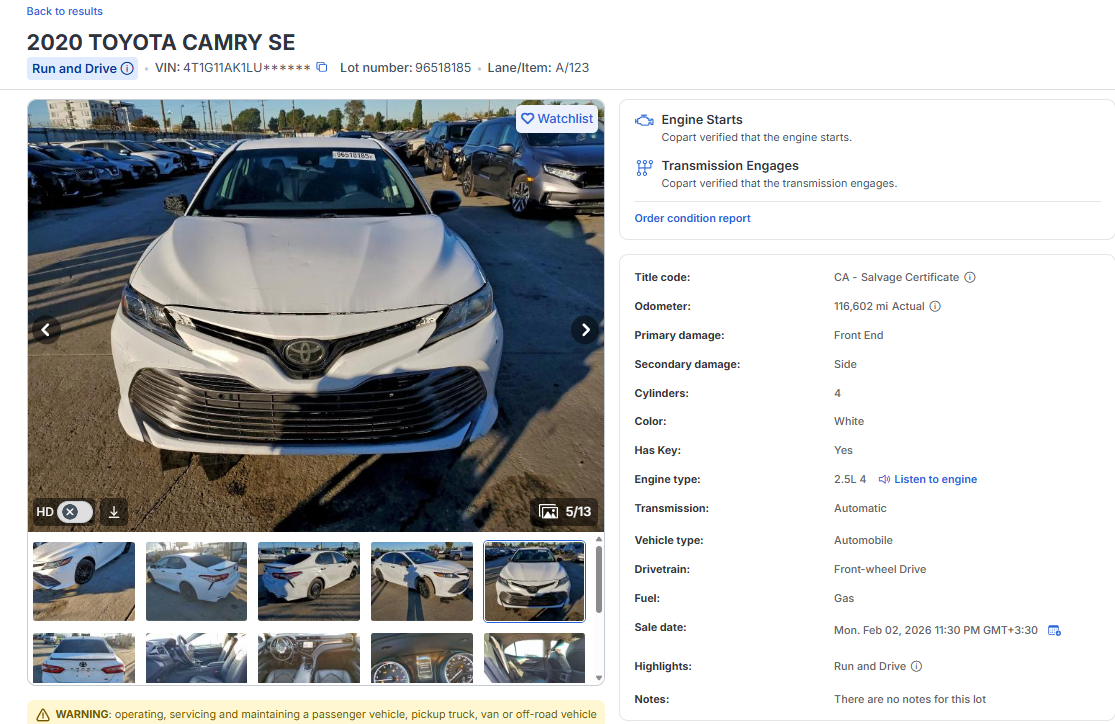 Real Copart listing: 2020 Toyota Camry SE with salvage title, front end and side damage
The exterior photos show a dented hood, misaligned bumper, and some damage to the right rear quarter panel. Looks repairable. The interior photo shows clean black leather seats and an intact dashboard. Seems promising.
But there's something hiding in those photos that most buyers would miss entirely. We'll come back to this car later in the article, and you'll see exactly what we mean.
What Is a Salvage Title?
A salvage title means an insurance company has declared the vehicle a "total loss."
This usually happens when:
- The car was in a serious accident
- It was damaged by flood, fire, or hail
- It was stolen and recovered after the claim was paid
- Repair costs exceed a certain percentage of the car's value (usually 70 to 80 percent, depending on the state)
Once a car gets a salvage title, that status stays on the record forever, even if it's fully repaired later. A repaired salvage car gets a "rebuilt" title, but the history never disappears.
What Is a Salvage Auction?
Salvage auctions are where insurance companies, dealerships, and fleet owners sell their damaged or totaled vehicles.
The two biggest salvage auctions in the US are Copart and IAAI. Together, they sell millions of vehicles every year.
Here's how they work:
- Vehicles are listed online with photos and basic info
- You can bid online from anywhere in the world
- Most cars are sold "as is" with no warranty
- You'll need to arrange your own shipping or pickup
These auctions aren't just for dealers anymore. Anyone can sign up and start bidding. That's why more people are discovering the opportunity and the risks of buying salvage cars.
Pros of Buying a Salvage Car
1. Significant Cost Savings
The numbers speak for themselves. A 2021 Toyota Camry SE with 116,000 miles and a clean title sells for around $17,000 in the market. The same car with a salvage title recently sold for $2,500 to $3,500. Even after repairs, you could end up with a reliable car for half the retail price.
2. Great for Resale or Export
Many buyers purchase salvage vehicles to repair and resell domestically or export internationally. In countries where parts and labor are cheaper, a salvage car can be fully restored at a fraction of US repair costs.
3. Valuable Parts
Even if the car isn't worth repairing, you can part it out. Engines, transmissions, body panels, and electronics from salvage cars are in high demand.
4. Learning Opportunity
For mechanics and hobbyists, salvage cars offer a hands-on way to learn. You can practice repairs, experiment with upgrades, and build skills without risking an expensive vehicle.
Cons of Buying a Salvage Car
1. Hidden Damage
Photos don't always tell the full story. A car might look repairable, but once you dig in, you discover frame damage, flood damage, or electrical problems that weren't visible in the listing.
Remember our Camry? Here's what happens when you look more carefully at the photos. We ran the auction images through an AI damage analysis tool. It identified five separate repair items on the front alone, including a misaligned bumper cover, damaged grille components, and a hood alignment issue suggesting a possible tie bar shift underneath.
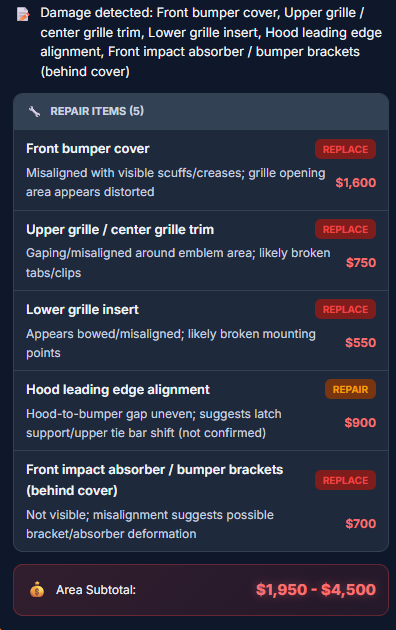 Front damage breakdown: 5 repair items identified, $1,950 to $4,500 estimated
The right side wasn't just a cosmetic dent either. The analysis caught a damaged rear quarter panel and flagged that the car was running on a temporary spare, meaning the original wheel or tire was likely damaged or missing.
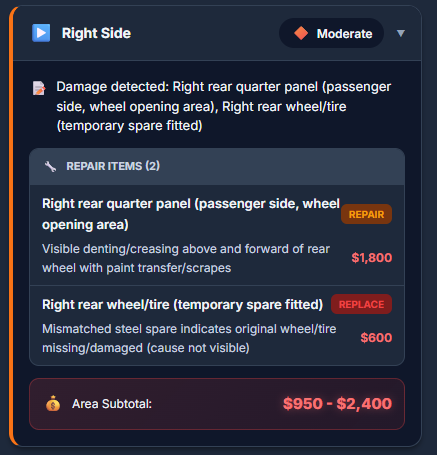 Right side: quarter panel damage and temporary spare flagged, $950 to $2,400
But here's the real problem. The interior photo, the one that looked perfectly clean, actually revealed something critical.
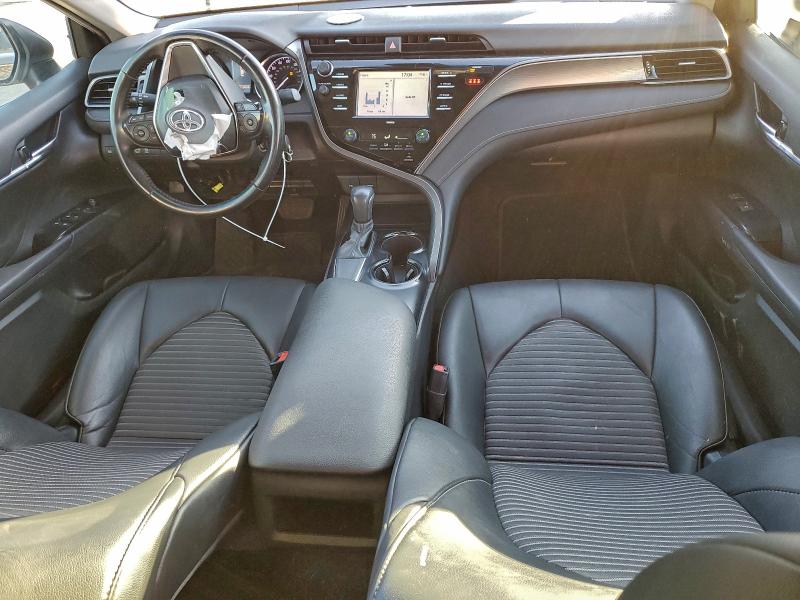 The interior looks clean. Most buyers would scroll past this photo without a second thought.
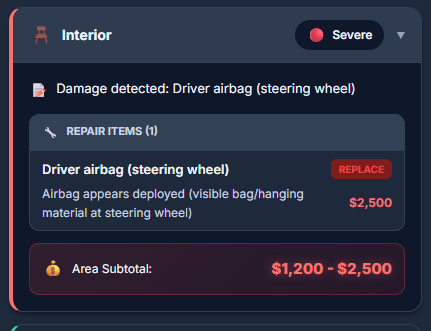 Interior analysis: deployed driver airbag detected. Severity: Severe. $1,200 to $2,500
The total estimated repair cost for this "simple front-end hit" Camry? $2,400 to $9,500.
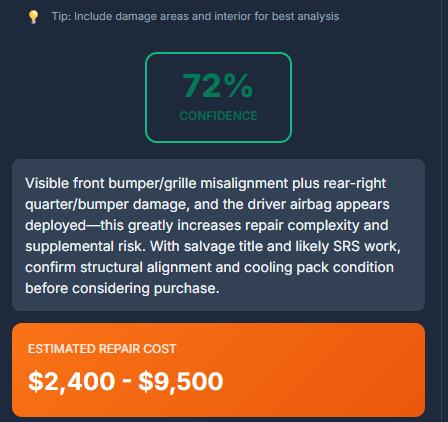 Final verdict: 72% confidence, $2,400 to $9,500 total repair estimate
At the worst case, you're paying $4,000 for the car plus $9,500 in repairs. That's $13,500 for a rebuilt-title Camry that's worth maybe $10,000 to $11,000. The deal that looked great on paper just became a loss.
2. Insurance Challenges
Many insurance companies won't offer full coverage on salvage title vehicles. You might only qualify for liability insurance, which limits your protection.
3. Resale Difficulties
Even after repairs, a rebuilt title car is worth less than a clean title equivalent. Some buyers won't touch it, and dealerships rarely accept them as trade-ins.
4. Financing Limitations
Most banks won't finance a salvage or rebuilt title car. You'll likely need to pay cash or find a specialty lender with higher rates.
5. Unpredictable Repair Costs
What looks like a $3,000 repair can quickly become $8,000 once you open things up. Without experience, it's easy to underestimate the true cost, as we just saw with the Camry.
When Is Buying a Salvage Car Worth It?
A salvage car can be a smart purchase if:
You're a mechanic or have access to one. Knowing how to diagnose and repair damage yourself dramatically reduces costs and risk.
You're buying for export. Labor and parts are cheaper in many countries, making repairs more economical.
The damage is cosmetic only. Hail damage, minor collisions, or vandalism that didn't affect the frame or drivetrain are often easy and affordable to fix.
You understand the specific damage type. Rear-end collisions are generally easier to repair than front-end hits that might involve the engine, airbags, or suspension.
You have cash to invest. Since financing is difficult, having cash on hand makes the process smoother.